July 8, 2026
Most failed agent systems do not fail because the model is too weak.
They fail because the work is not defined.
The operator says:
Help me with sales.
Improve the website.
Make content.
Analyze this.
Find opportunities.
Then the agent returns something plausible, generic, and difficult to use. Everyone blames the model. Sometimes the model deserves it. Usually the first failure happened earlier.
There was no brief.
A prompt is a request.
A brief is a contract.
The difference matters because agents are not magic employees hiding behind a chat box. They are execution surfaces. They can classify, draft, summarize, inspect, research, compare, route, update, remind, and propose. But they cannot responsibly invent the business from vibes.
The clearer the operator, the more leverage the agent can create.
The vaguer the operator, the more expensive the theater becomes.
More agents make confusion louder
When I first built my own agent fleet, I thought the bottleneck was capacity.
Too many projects. Too many ideas. Too many half-finished systems. Too much maintenance. Too many follow-ups. Too much context switching.
The obvious answer was leverage.
More agents. More scheduled jobs. More integrations. More inboxes. More automations. More memory.
Technically, it worked.
The jobs ran. The reports landed. The files updated. The bots captured ideas. The workflows executed. The system looked alive.
Then the uncomfortable part appeared.
Some agents were not waiting for better intelligence.
They were waiting for me.
I had built roles before I had defined enough real work for those roles to own.
That is the part nobody wants to admit. A confused person is inefficient. A fleet of agents serving a confused person is expensive theater with better logs.
Every new agent adds questions:
- What does this agent own?
- What is it allowed to touch?
- What does it produce?
- Who consumes the output?
- When should it act without asking?
- When must it escalate?
- What does “good” mean?
- What happens if nobody responds?
- How do we know the work changed reality?
Without answers, the agent is not a teammate. It is another inbox.
The operator does not disappear
The fantasy version of agents says:
Build enough of them and the company starts running itself.
The version I have lived is less comfortable:
If the operator does not define the work, the company sits still with better automation.
Agents remove manual work. They do not remove judgment.
The operator still chooses priorities, defines boundaries, kills dead processes, accepts or rejects outputs, decides what risk is acceptable, and owns the consequences.
This is not motivational language. It is mechanical.
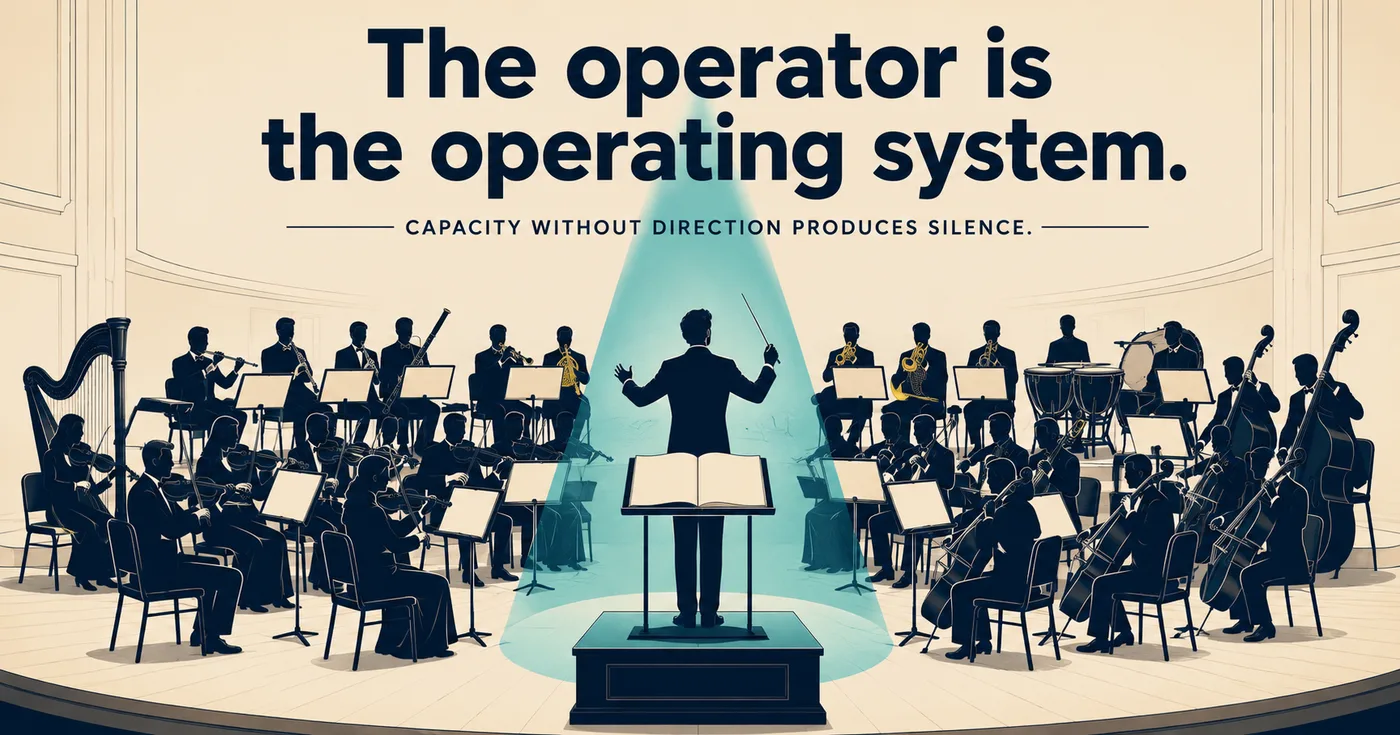
The operator is still the operating system.
The agent fleet accelerates that operating system. It does not replace it.
A clear operator gets leverage: better drafts, better reports, better follow-up lists, better summaries, better monitoring, better execution.
A vague operator gets artifacts describing that nothing important happened.
A useful brief has seven parts
A good agent brief does not need to be long. It needs to be complete enough that the agent can act without inventing the business.
The seven parts I care about are:
1. Outcome
What should be different when this work is done?
Not the activity. The result.
Bad:
Analyze our leads.
Better:
Identify which inbound leads from the last 14 days deserve follow-up this week, explain why, and produce a prioritized action list for the owner.
2. Context
What does the agent need to know to make sane decisions?
This includes the business model, offer, customer type, relevant files, previous decisions, constraints, current priorities, definitions, and anything that would normally live in a capable employee’s head.
Bad context produces confident nonsense.
3. Constraints
What must the agent respect?
Budget. Tone. tools. Permissions. Legal boundaries. Client promises. Brand rules. Data limits. Channels. Deadline. Output format. Human approval requirements.
Autonomy without constraints is either useless or dangerous.
4. Definition of done
How do we know the work is complete?
A vague finish line creates vague output.
Examples:
- A CSV with qualified leads and next actions.
- A draft email for each prospect.
- A list of records that need human review.
- A summary that can be pasted into the weekly operating meeting.
- A pull request with tests passing.
- A recommendation with assumptions and risks stated.
5. Allowed actions
What can the agent actually do?
Read only? Draft only? Update CRM fields? Send messages? Create tasks? Modify files? Trigger workflows? Spend credits? Contact customers?
Most business agents should not start with broad permission. They should earn authority by proving reliability in narrow lanes.
6. Failure modes
What should the agent avoid?
This is the section most people skip, and it is often the most important.
Examples:
- Do not send a customer-facing message without approval.
- Do not overwrite source-of-truth files; propose a diff.
- Do not invent missing pricing.
- Do not mark a lead as lost without human review.
- Do not summarize legal or financial documents as if advice.
- Escalate when confidence is low or context conflicts.
The agent needs to know what bad looks like.
7. Next action
What happens after the output is produced?
A report nobody reads is waste. A classification that does not route work is decoration. A summary that does not change a decision is theater.
Every brief should connect to a next action: send, review, approve, assign, follow up, update, publish, archive, schedule, escalate.
If there is no next action, the work may not matter.
A bad prompt versus a real brief
Bad prompt:
Help me improve sales follow-up.
This feels reasonable. It is not delegation.
Better brief:
Review the leads in
pipeline.yamlwith statusnew,qualified, orwaiting_replyfrom the last 30 days. Produce a prioritized follow-up list for this week. Use priority rules fromsales-policy.md. Include owner, last contact date, recommended next message, reason for priority, and whether human approval is required. Do not send messages. Flag any record with missing source, unclear status, or conflicting notes. Output as Markdown underreports/follow-up-review-YYYY-MM-DD.md.
That is a job.
The first one asks the agent to guess the business.
The second one gives the agent a lane.
Small companies feel this first
Large companies can hide unclear operating models behind departments, meetings, and process theater.
Small companies cannot.
If nobody owns follow-up, follow-up does not happen. If nobody defines qualification, every lead becomes a debate. If nobody decides what gets measured, dashboards become decoration. If nobody maintains context, every answer depends on memory and luck.
Agents expose this.
They show whether the business has an operating model or just habits.
A company that says “we need an AI sales agent” often needs, first:
- one intake path;
- one qualification rule;
- one source of truth;
- one follow-up cadence;
- one escalation path;
- one set of approved messages;
- one weekly review of what moved and what died.
Only then does an agent have something useful to operate.
Otherwise it is a chatbot on top of a broken process.
The operator’s real job
In an agentic operation, the operator has five jobs.
First, choose the work.
Not everything deserves automation. Not every process deserves an agent. Not every recurring task deserves to exist.
Second, write the brief.
Shape the work before delegating it.
Third, maintain context.
Agents need current truth. Old docs, stale assumptions, contradictory instructions, and dead files poison the system quietly.
Fourth, review consequences.
The question is not whether the agent completed the task. The question is whether anything in the real world improved.
Fifth, kill what does not pay rent.
Dead agents. Dead workflows. Dead dashboards. Dead rituals. If they do not create external value, they are internal decoration.
That fifth job is the hardest.
A bad system gets fixed. A mediocre system becomes furniture.
The standard is going up
Agents do not replace operators.
They raise the standard for operators.
When software can draft, classify, summarize, monitor, inspect, route, and report, the remaining bottleneck is harder to hide.
What should be done?
For whom?
By when?
To what standard?
With what authority?
What happens next?
That is the work.
The agent era does not make judgment less important.
It makes judgment more visible.
I help companies turn unclear operations into practical systems: intake, follow-up, reporting, documentation, agent workflows, and the operating layer around them. If your team needs agents that can actually operate inside the business, contact me.
You can also email me at nicolasdominici@outlook.com or DM me on LinkedIn.